Play Canasta
Build canastas of seven and pile up bonuses before you go out.How to Play Canasta
In a nutshell: Build canastas of seven and pile up bonuses before you go out. You play 2 players against the computer with 2 decks and 15 cards each, it's rated deep, and the goal is simple: meld matching cards with wild-card help, complete canastas of seven, and score big before going out.
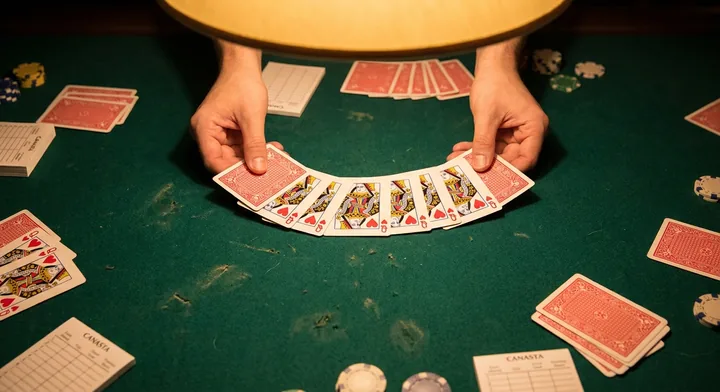
Canasta is a melding game for two players played with two full decks plus four jokers, where the aim is not just to meld matching cards but to build a canasta - a single meld of seven or more cards of the same rank. On your turn you draw from the stock or scoop up the entire discard pile, then lay down groups of a rank, leaning on wild cards - the jokers and the twos - to fill out your melds. A natural or pure canasta with no wilds is worth a huge 500-point bonus, while a mixed canasta scores 300, so the tug between speed and purity gives every hand real tension. Red threes are set aside as 100-point bonus cards, the discard pile can be frozen to lock it away, and you cannot go out until you have completed a canasta. It rewards patience, memory, and a sharp eye for the right moment to strike.
Canasta at a glance
| Goal | Meld matching cards with wild-card help, complete canastas of seven, and score big before going out. |
|---|---|
| Players | 2 players (versus the computer here) |
| Cards dealt | 15 cards each |
| Decks used | 2 standard decks shuffled together |
| Difficulty | Deep |
| Family | Melding |
Step by step
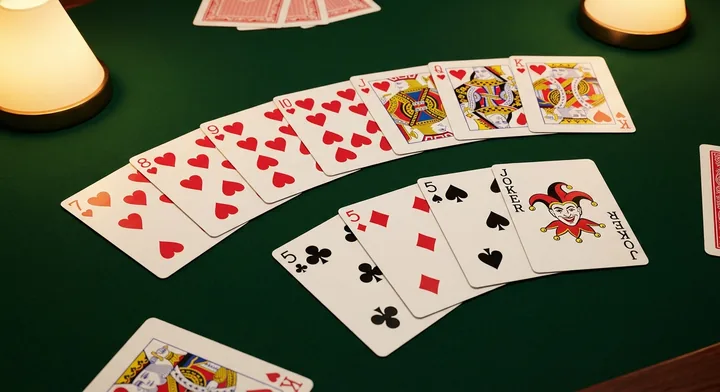
Goal
Meld cards of matching rank, complete at least one canasta of seven or more cards, and finish with more points than your opponent before someone goes out.
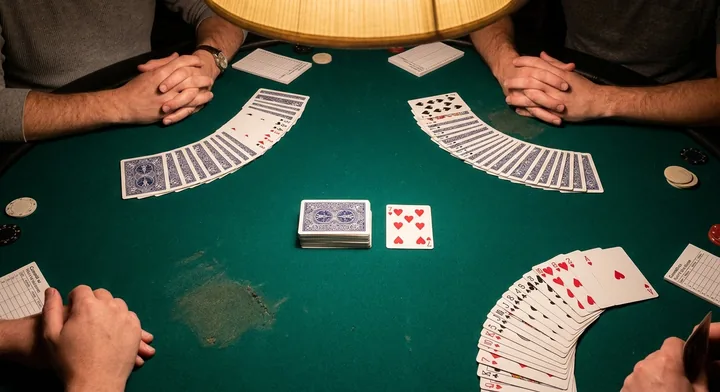
Deal
Shuffle two 52-card decks together with four jokers. Each player is dealt fifteen cards, the remaining cards form the stock, and the top card is turned face up to start the discard pile.
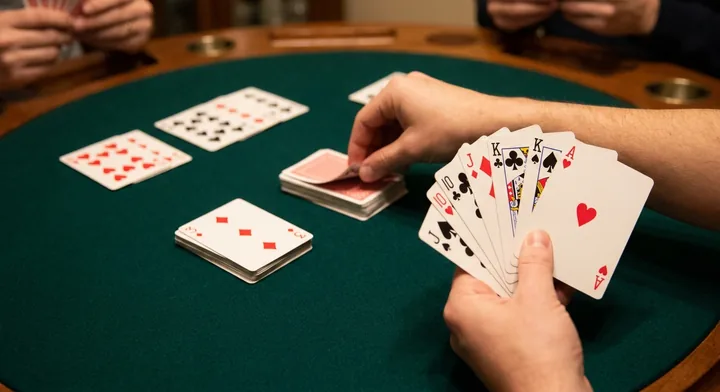
Draw and discard
On your turn draw the top card of the stock, or take the whole discard pile if you can immediately meld its top card. After making any melds you must discard one card to end your turn.
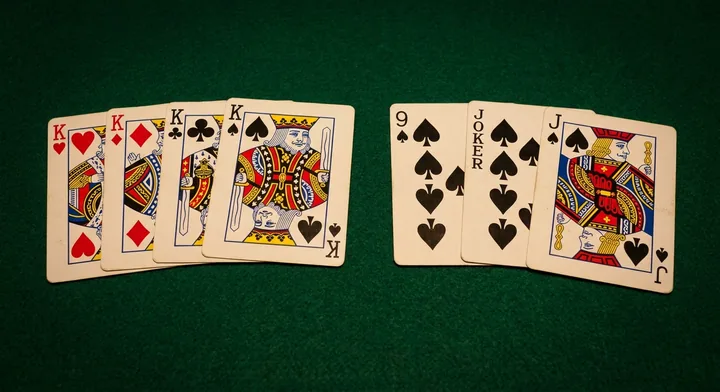
Melds
A meld is three or more cards of the same rank, and may use wild cards - jokers worth 50 and twos worth 20 - as long as natural cards outnumber the wilds. Seven or more cards of a rank form a canasta.
Winning
You may only go out once you hold a completed canasta. Add meld card values, canasta bonuses and red threes, then subtract the value of cards left in hand; the higher total wins the deal.
History of Canasta
Canasta grew out of earlier Rummy games in Montevideo, Uruguay, in the late 1930s, where it is credited to Segundo Santos and Alberto Serrato, who wanted a game with less reliance on luck than the Rummy variants of the day. Its name comes from the Spanish word for basket, a nod to the tray that held the stock and discards.
The game swept through South America and reached the United States around 1949, where it became a genuine craze in the early 1950s, at times outselling every other card game and even rivaling Contract Bridge for a spell. Books, tournaments and countless house rules spread quickly, cementing the canasta bonus and the frozen pile as the hallmarks of the game.
Though the mania cooled, Canasta never disappeared. Partnership Canasta remains the classic four-handed form, while spin-offs such as Hand and Foot, Samba and Bolivia kept the melding-into-baskets idea alive, and the two-handed game endures as a sharp, tactical contest of memory and timing.
How to Win Canasta: Strategy
💡 Top tip: Turn one promising meld into a full canasta as early as you can - the 300 to 500 point bonus dwarfs the value of any individual cards you might chase.
Winning tips, in order of importance
- Hoard wild cards, the jokers and twos, but do not bury them in half-finished melds; save them to complete a canasta or to freeze the pile at the perfect moment.
- Watch which ranks your opponent discards and collects, and avoid throwing cards that let them scoop the whole pile with a matching top card.
- Play red threes to the table as soon as you draw them so you bank the 100-point bonus and draw a replacement card.
- Aim for a natural canasta whenever a rank is running your way, since the pure 500-point bonus is worth stretching for over a quick mixed 300.
- Do not rush to go out - the discard pile can hold dozens of points, and leaving cards in your opponent's hand while you empty yours swings the score hard.
- Freeze the pile against a threatening opponent, since once it is frozen they need a natural pair of the top card's rank to take it.
Advanced tactics for Canasta
- Track how many of each rank have been discarded so you know which canastas are still realistically completable and which are dead ends.
- Time your first meld to coincide with taking a fat discard pile; melding early on thin cards often just hands information to your opponent for little gain.
- Keep a safe discard in reserve - a card of a rank you have already seen melded or heavily discarded is far less likely to feed a pile grab.
- Balance the risk of holding red threes versus wilds late, because unmelded cards in hand count against you if your opponent goes out first.
- When you are close to going out, count both hands' likely leftover points before committing, since a premature exit can cost more than it saves.
- Use a frozen pile as a weapon when ahead - freezing slows the whole tempo and denies your opponent the easy melds they need to catch up.
- Manage the black threes as blockers; discarding one stops your opponent taking the pile that turn, since black threes cannot normally be taken as a meld start.
Common Canasta mistakes to avoid
- Going out before you have a canasta - you cannot end the hand without at least one seven-card meld, so build that canasta before you try to go out.
- Discarding a card that matches the pile's top - a wild or a matching discard can freeze the pile and lock you out of a big take, so watch the top card.
- Ignoring red threes - they score bonus points and must be laid up immediately, not held in your hand as dead weight.
- Overusing wild cards in a meld - each meld allows only so many wilds, so save them and keep your melds legal and canasta-ready.
Canasta Variations
Partnership Canasta
The classic four-player form with two partnerships. Partners share melds on the table and must together complete a canasta before either can go out, adding a communication and signaling layer.
Hand and Foot
Each player is dealt two sets of cards - a hand and a foot - and only picks up the foot after emptying the hand. It stretches the canasta idea over longer deals with larger targets.
Samba
Played with three decks, Samba allows sequence melds of the same suit as well as rank melds, and adds the sambas - seven-card runs - alongside ordinary canastas for extra bonuses.
Bolivia
A three-deck variant where wild cards can form their own melds called bolivias, and sequence canastas known as escaleras score large bonuses, raising the ceiling on a big hand.
Two-handed Canasta
The head-to-head form used here, where each player is dealt fifteen cards and draws two from the stock each turn in many rule sets, sharpening the game into a duel of memory and timing.
Canasta FAQ
How many cards make a canasta?
A canasta is a meld of seven or more cards of the same rank. A natural canasta contains no wild cards and scores a 500-point bonus, while a mixed canasta uses one or more wilds and scores 300.
Which cards are wild in Canasta?
Jokers and twos are wild. A joker is worth 50 points and a two is worth 20 points, and a meld must always contain more natural cards than wild cards.
What are red threes for?
Red threes are bonus cards worth 100 points each. You lay them face up as soon as you draw them and immediately draw a replacement, so they never stay in your hand.
What does it mean to freeze the discard pile?
Freezing the pile locks it so that a player can only take it by holding a natural pair matching the top card's rank. A wild card or a black three placed on top freezes the pile.
Can I go out whenever I want?
No. You may only go out - empty your hand - once your side has completed at least one canasta. Without a canasta you must keep playing even if you could otherwise get rid of your cards.
How are the card points valued?
Jokers score 50, aces and twos score 20, kings down to eights score 10, and sevens down to fours plus the black threes score 5 each. Red threes are separate 100-point bonuses.
Can I take the discard pile any time?
Only when you can meld its top card right away, and only if the pile is not frozen against you. If it is frozen you additionally need a natural pair of that rank in hand.
What happens to cards left in my hand?
When the deal ends, the point value of every card still in your hand is subtracted from your score, so unmelded wilds and high cards can turn a good hand into a losing one.
Canasta guides & strategy
Still have a question about Canasta? Browse the full rummy FAQ, look up a term like meld or deadwood in the rummy glossary, or compare Canasta with the other games in the rules for every rummy game.
Last updated .