Play Oklahoma Gin
Gin Rummy with a twist - The first upcard sets the knock limit.How to Play Oklahoma Gin
In a nutshell: Gin Rummy with a twist - The first upcard sets the knock limit. You play 2 players against the computer with 1 deck and 10 cards each, it's rated sharper gin, and the goal is simple: play standard gin, but the value of the first upcard fixes the maximum deadwood you may knock with.
Oklahoma Gin takes everything you love about classic Gin Rummy and adds one clever wrinkle that changes every hand: the first card turned up from the deck decides how low your deadwood must be before you are allowed to knock. Flip a seven and you can knock at seven or fewer; flip a low card and you are squeezed toward a much tighter finish; flip an ace and you must go Gin outright. That single rule turns a comfortable ten-point cushion into a moving target, so you never quite know how aggressively to build your hand until the upcard is revealed. The result is a sharper, more disciplined game that rewards players who can shift gears on the fly, tightening up when the knock limit is stingy and pressing their luck when it is generous. It is a favorite among Gin regulars looking for a little extra bite in their duel.
Oklahoma at a glance
| Goal | Play standard Gin, but the value of the first upcard fixes the maximum deadwood you may knock with. |
|---|---|
| Players | 2 players (versus the computer here) |
| Cards dealt | 10 cards each |
| Decks used | 1 standard deck |
| Difficulty | Sharper Gin |
| Family | Gin Family |
Step by step
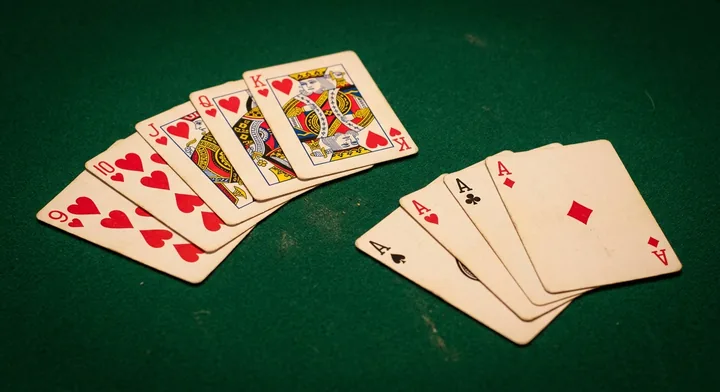
Goal
Play standard Gin Rummy, but respect the knock limit set by the first upcard - build your ten cards into sets and runs and go out only when your deadwood is at or below that number.
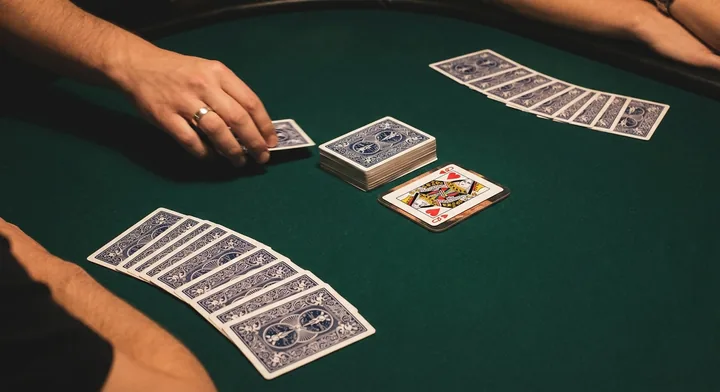
Deal
With one 52-card deck, deal ten cards to each player and turn the next card face up. The value of that upcard becomes the maximum deadwood allowed for knocking this hand, and an ace means you must go Gin.
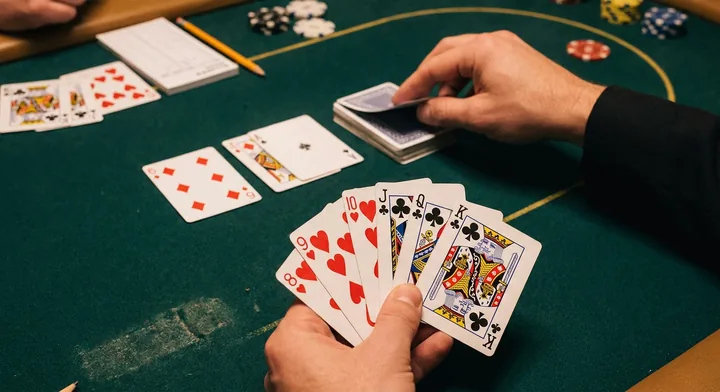
Draw and discard
Turns work exactly as in Gin: draw either the top stock card or the top discard, then discard one card, always holding ten. The upcard's knock limit applies to both players for the whole hand.
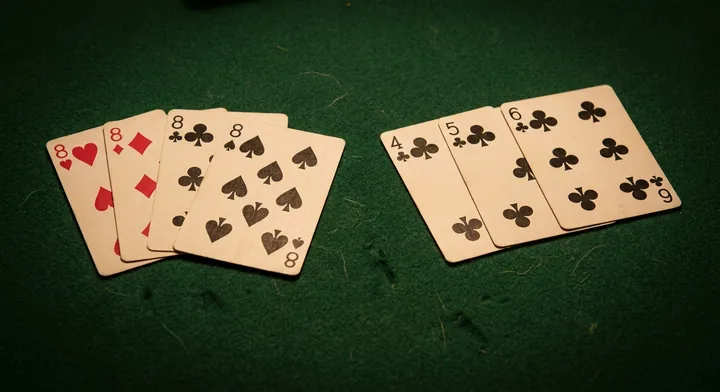
Melds
Form sets of three or four cards of one rank or runs of three or more consecutive cards in one suit. Aces are low. Any card left outside a meld is deadwood, scored at pip value with face cards worth ten and aces worth one.
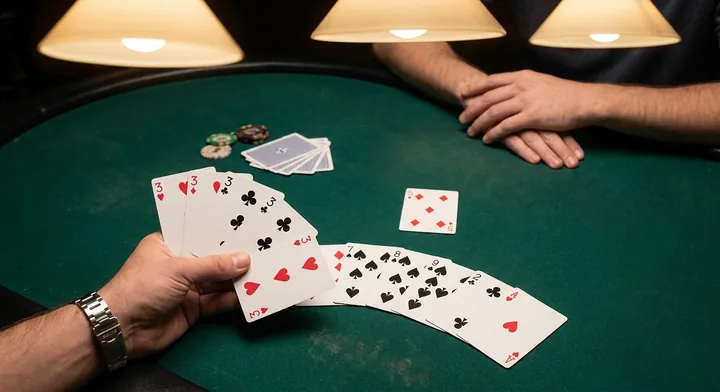
Winning
Knock only when your deadwood is at or below the upcard's value. Your opponent lays off onto your melds, lower deadwood wins the difference, and going Gin still earns its bonus. By tradition a spade upcard doubles the hand's score.
History of Oklahoma
Oklahoma Gin is one of the oldest and most popular offshoots of standard Gin Rummy, dating from the same mid-twentieth-century boom that made Gin a national pastime in the United States. Its defining rule - letting the first upcard dictate the knock limit - was an early and enduring attempt to inject more variety and tension into every deal.
The variant is sometimes said to have been a favorite of card players in and around Oklahoma, though like many card-game origin stories the exact source is hard to pin down. What is clear is that it spread widely through Gin-playing circles precisely because it demanded more skill: a shifting knock threshold punishes lazy play and rewards those who can adapt their strategy hand by hand.
Today Oklahoma Gin is one of the most commonly offered Gin variants in card books, casinos and digital game collections. Its reputation as a tighter, more strategic cousin of Gin Rummy - complete with the dramatic ace-means-Gin rule and the score-doubling spade upcard - keeps it a staple challenge for players who have mastered the basic game and want something with more edge.
How to Win Oklahoma: Strategy
💡 Top tip: Read the upcard before you commit to a plan - a high knock limit lets you play loose and knock early, while a low one demands you chase a near-perfect hand from the first draw.
Winning tips, in order of importance
- When the limit is tight, prioritize breaking up high-value deadwood at once, because you cannot afford stray tens and face cards when the knock number is small.
- If the upcard is an ace and Gin is mandatory, play patiently for the full meld and hold flexible cards rather than rushing toward a knock you are not allowed to make.
- With a generous limit, race to reach a knockable count and go out fast, denying your opponent the extra turns they need to organize their own hand.
- Discard high cards early no matter the limit, since deadwood points hurt far more when the ceiling for knocking is low.
- Track your opponent's draws just as in regular Gin - the tighter knock limit means both of you are fighting for the same low cards, so information is doubly valuable.
- Watch the suit of the upcard: if you play the common rule that a spade doubles the stakes, tighten your risk-taking because every point now counts double.
Advanced tactics for Oklahoma
- Recalculate your target the instant the upcard appears - the difference between a knock limit of nine and one of three completely changes which speculative melds are worth keeping.
- Against a low knock limit, undercuts become deadlier because both hands are forced tight, so knock only when you are confident your count truly beats a lean opponent.
- When Gin is mandatory on an ace upcard, remember your opponent also cannot knock early, so the hand becomes a pure race to the full meld - favor the cards with the most completion routes.
- Bank on the doubling rule if you play spades-double: a strong hand under a spade upcard is worth pressing hard for Gin, while a weak one is worth folding your risk and defending.
- Because low limits keep more cards in play longer, count the stock carefully - a hand that cannot legally knock in time should pivot to denying your opponent their winning card.
- Manage the running score to 100 with the limit in mind; a stingy upcard that blocks an easy knock can be turned to your advantage if you are the better defensive player.
- Hold safe, dead cards to discard on the turns when you are close but not yet under the limit, buying time without feeding your opponent the ranks they need.
Common Oklahoma mistakes to avoid
- Playing a flat ten-point knock limit - in Oklahoma the first upcard sets the maximum, so an Ace or low upcard may force you to go gin or near it.
- Overlooking the spade upcard bonus - when the turned card is a spade the whole hand scores double, so play tighter and press your advantage.
- Knocking above the round's limit by habit - always recheck the upcard value before you knock, since last hand's limit rarely matches this one's.
- Clinging to high cards under a low limit - a strict knock ceiling punishes deadwood hard, so dump big unmatched cards fast.
Oklahoma Variations
Spades double
The classic Oklahoma add-on in which a spade first upcard doubles the score for the whole hand, dramatically raising the stakes whenever the deck turns up a spade.
Ace means Gin
The standard rule that an ace upcard sets the knock value to one, effectively requiring both players to go Gin in order to finish the hand.
Spade forces Gin
A house-rule alternative in which a spade upcard - rather than doubling the score - requires the hand to be won by going Gin, tightening play even further.
Oklahoma with standard Gin bonuses
Most groups keep Gin's usual bonuses - 25 for Gin, 25 for an undercut, plus line and game bonuses - layered on top of the variable knock limit.
Fixed-limit hybrids
Some casual players cap or floor the knock value, for example never letting it drop below three, to avoid extremely harsh hands while keeping the upcard-driven flavor.
Oklahoma FAQ
How does Oklahoma Gin differ from regular Gin Rummy?
The rules are identical except for one thing: in Oklahoma Gin the first upcard sets the maximum deadwood you may knock with, instead of the fixed ten-point limit of standard Gin. This makes the knock threshold change from hand to hand and forces sharper decisions.
What happens if the first upcard is an ace?
An ace upcard means the knock value is one, which in practice requires both players to go Gin to end the hand. No ordinary knock is possible, so the deal becomes a patient race to meld all ten cards.
How does the upcard set the knock value?
You read the upcard at pip value: a seven allows knocking at seven or fewer deadwood, a four allows four or fewer, and so on. Face cards count as ten, which plays exactly like standard Gin's ten-point limit for that hand.
What is the spade rule in Oklahoma Gin?
The most common tradition is that if the first upcard is a spade, the score for the entire hand is doubled, raising the stakes considerably. Some groups instead play that a spade upcard forces both players to go Gin, so it is worth agreeing which version you are using before you deal.
Do face cards and aces still count the same in Oklahoma Gin?
Yes. For deadwood, face cards are worth ten points, aces are worth one, and number cards are worth their pip value, exactly as in ordinary Gin. The only change is the knock limit set by the upcard.
Is Oklahoma Gin harder than standard Gin?
Many players find it sharper and more demanding, because a low knock limit removes the comfortable ten-point cushion and pushes hands toward Gin. It rewards discipline and quick reassessment, which is why it is a favorite of experienced Gin players.
Can you still go Gin in Oklahoma Gin?
Absolutely, and going Gin still earns its usual bonus of 25 points. When the upcard forces a very low knock limit, going Gin is often the only realistic way to end the hand at all.
What score do you play to in Oklahoma Gin?
Like classic Gin, the standard target is 100 points across a series of hands, with the usual line and game bonuses. Because the changing knock limit can produce bigger swings, sessions sometimes feel faster and more volatile than regular Gin.
Oklahoma guides & strategy
- What is Oklahoma Gin and how does the upcard work?
- How do you go Gin for the bonus?
- Browse the full rummy FAQ
Still have a question about Oklahoma Gin? Browse the full rummy FAQ, look up a term like meld or deadwood in the rummy glossary, or compare Oklahoma with the other games in the rules for every rummy game.
Last updated .