Play Dummy Rummy
Deuces and jokers are wild in this swingy melding game.How to Play Dummy Rummy
In a nutshell: Deuces and jokers are wild in this swingy melding game. You play 2 players against the computer with 2 decks and 13 cards each, it's rated wild and swingy, and the goal is simple: with 2s and jokers wild, complete the round's melds, lay off freely, and be first to go out.
Dummy Rummy is a swingy, wild-card-drenched member of the American rummy family, played across a series of deals with two full decks and their jokers. What sets it apart is generosity with wilds: every 2 and every joker is wild, so a single hand can hold a small army of substitutes that turn broken cards into finished melds. Each deal carries its own required combination of sets and runs that you must lay down before you can start laying off, and the round ends the moment someone sheds their last card. Because wild cards can carry a huge scoring penalty when caught in your hand, fortunes swing hard from deal to deal - A hand that looks unbeatable can collapse if an opponent goes out first. It rewards bold melding, careful timing, and a nerve for holding wilds just long enough.
Dummy Rummy at a glance
| Goal | With 2s and jokers wild, complete the round's melds, lay off freely, and be first to go out. |
|---|---|
| Players | 2 players (versus the computer here) |
| Cards dealt | 13 cards each |
| Decks used | 2 standard decks shuffled together |
| Difficulty | Wild and swingy |
| Family | 13-Card |
Step by step
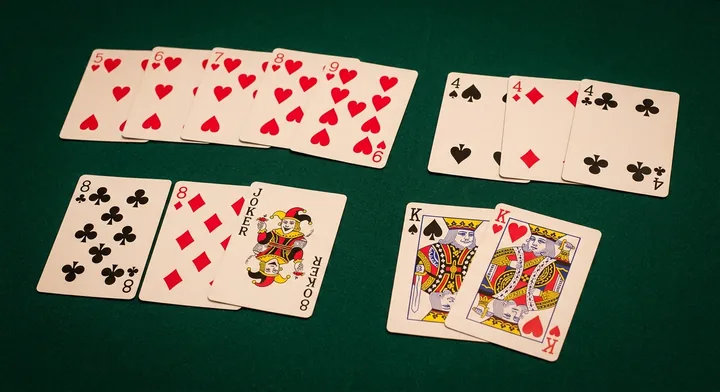
Goal
Complete the specific melds required for the current deal, get rid of all your cards to go out, and finish the full set of deals with the lowest total penalty score.
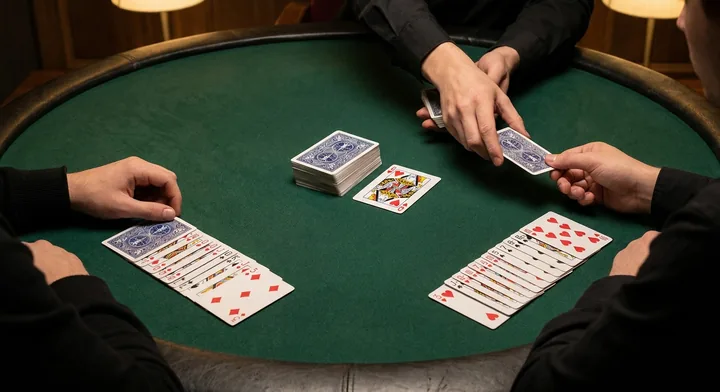
Deal
Two decks plus the jokers are shuffled together and each player is dealt thirteen cards. The remainder forms the stock, with one card turned up to begin the discard pile. Play runs over seven or more deals, each demanding a different required meld.

Draw and discard
On your turn, draw either the top card of the stock or the top of the discard pile, then end your turn by discarding one card face up. You may lay down melds and lay off during your turn once you have met the deal's requirement.
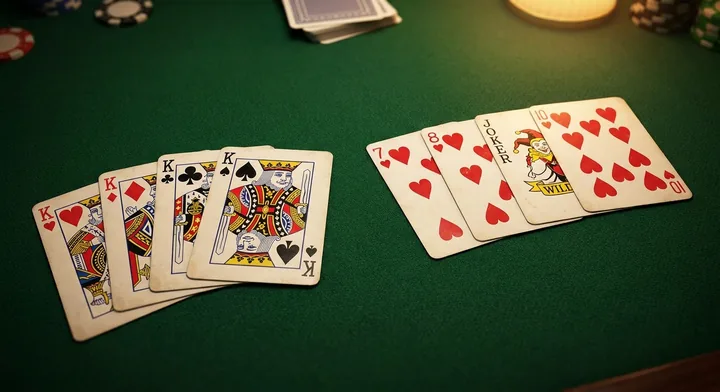
Melds
Sets are three or more cards of the same rank and runs are sequences of the same suit. Every 2 and every joker is wild and can stand in for any card - But a single meld can never contain more wild cards than natural ones.

Winning
Once you have laid down the deal's required melds, you may lay off cards onto any melds on the table and race to empty your hand. Going out ends the deal; everyone else scores the cards left in hand, and the lowest cumulative score after the final deal wins.
History of Dummy Rummy
Dummy Rummy belongs to the broad family of American rummy games that flourished in the twentieth century, close in spirit to contract-style variants such as Liverpool Rummy and Shanghai Rummy, where each deal carries its own required combination of melds. Its distinguishing feature is a lavish use of wild cards: not only the jokers but every 2 in both decks.
The game spread as a home and club pastime, valued for the drama that all those wilds create. Because a hand can swing so violently, Dummy Rummy became a favorite for players who enjoy bold gambles and dramatic reversals rather than the steadier calculation of Gin Rummy, and house rules for the exact deal requirements and scoring values passed informally from table to table.
Like many traditional card games, Dummy Rummy has no single codified rulebook, and its scoring values and deal sequence vary from group to group. It found a new audience through digital card rooms and app collections, which standardized a common version - Two decks, wilds on the 2s and jokers, a run of required melds, and the rule that wilds may never outnumber naturals in a group.
How to Win Dummy Rummy: Strategy
💡 Top tip: Read the deal's required meld before anything else and build toward it directly - You cannot lay off a single card until that exact requirement is on the table.
Winning tips, in order of importance
- Do not hoard wild cards past their usefulness; a joker or 2 stranded in your hand when someone goes out is the heaviest penalty in the game.
- Because a meld can hold no more wilds than naturals, pair each wild with a solid natural card rather than trying to build groups out of substitutes alone.
- Get your required melds down quickly to unlock laying off, even if it means revealing your plan, since sitting on a complete hand risks getting caught when an opponent goes out.
- Track the discard pile for the ranks you still need, and pick from it only when the card genuinely advances your required combination.
- Dump high natural cards you cannot use early, so that if the deal ends suddenly you are not left holding tens and face cards.
- Watch how many cards your opponent is holding - When they get low, shift from perfecting your hand to unloading your most dangerous cards fast.
Advanced tactics for Dummy Rummy
- Count the wild cards you have seen: with the 2s and jokers in play, knowing how many remain live tells you whether to gamble on a wild completing a run or to switch to natural cards.
- When a deal requires runs, favor building around middle ranks where a wild can extend the sequence in either direction, rather than at an Ace or King edge where it can only go one way.
- Lay off aggressively once your requirement is met, spreading your leftover cards onto existing melds to shed penalty points before the deal can close on you.
- Time your own going-out around the wilds in your hand; if you are still holding jokers you cannot place, it can pay to unload them into a meld even at the cost of a slower finish.
- Because scores accumulate over seven or more deals, play the long game - Accepting a small penalty in one hand to avoid getting caught with wilds can win you the overall match.
- Deny your opponent the discard pile: think twice before throwing a card that completes an obvious run for them, especially when you can safely bury a different card instead.
- Balance your hand between the current deal's requirement and flexibility, so that a lucky draw or wild lets you pivot into going out rather than locking you into one rigid plan.
Common Dummy Rummy mistakes to avoid
- Forgetting the twos are wild alongside the jokers - Dummy Rummy has extra wilds, so plan melds around them instead of discarding them.
- Skipping a required contract - each round demands specific sets or runs, so read the round's contract before melding or you cannot lay down.
- Overloading one meld with wilds - most tables limit wilds per meld, so spreading them keeps every meld legal.
- Holding a big hand late - two full decks mean heavy penalty points, so shed high cards before an opponent completes the contract and goes out.
Dummy Rummy Variations
Number of deals
The classic game runs over seven deals, each with its own required meld, but many groups extend or shorten the sequence, so the exact number of hands and their requirements are set before play begins.
Wild card values
House rules differ on how heavily wild cards are penalized at the end of a deal; some score jokers and 2s at a fixed high value to punish hoarding, while others use gentler totals.
Contract Rummy family
Close relatives such as Liverpool Rummy, Shanghai Rummy, and Progressive Rummy use the same idea of escalating required melds each deal, differing mainly in which wilds they allow and the exact contracts.
Buying from the discard
Some versions let a player who is not on turn buy the top discard by taking a penalty card from the stock, adding a bidding-style wrinkle absent from the basic game.
Player count and decks
While two decks and their jokers are standard, larger groups sometimes add a third deck or extra jokers to keep enough wild cards and material in play for everyone.
Dummy Rummy FAQ
Which cards are wild in Dummy Rummy?
Every 2 and every joker is wild. With two decks and their jokers in play, that puts a large number of wild cards in circulation, which is exactly why the game swings so dramatically. A wild card can stand in for any rank or suit you need to complete a meld.
Can a meld be mostly wild cards?
No. A meld can never contain more wild cards than natural cards, so in a three-card group you may use at most one wild, and in a four-card group at most two. This rule stops players from building entire melds out of substitutes and keeps natural cards meaningful.
What are the required melds each deal?
Dummy Rummy is played over a series of deals, each of which demands a specific combination of sets and runs before you are allowed to lay off - For example two sets one deal and two runs the next. You must put down that exact requirement before you can add cards to melds on the table.
How do I win the game?
You win a single deal by going out - Emptying your hand after laying down the required melds. You win the whole game by having the lowest total penalty score once all the deals have been played, since leftover cards count against you each hand.
How does scoring work?
At the end of each deal, players total the cards still in their hands as penalty points, with face cards and tens scoring high and wild cards carrying the steepest penalty of all. These points accumulate across every deal, and the player with the fewest points at the finish is the winner.
What does laying off mean?
Laying off is adding a card from your hand onto a meld already on the table, whether it is yours or an opponent's. You may only lay off after you have put down your own required melds for the deal, and it is the main way to shed cards quickly and avoid being caught with a penalty.
How many players can play Dummy Rummy?
Dummy Rummy works well for two players and can accommodate more, with two decks giving plenty of cards to go around. The two-player game is sharp and tactical, since every card you discard is one your single opponent might use.
Why is Dummy Rummy so swingy?
The abundance of wild cards means hands can transform in an instant, and the heavy penalty for being caught with jokers or 2s means one poorly timed hand can erase a big lead. A player who looks certain to win can lose everything if an opponent goes out while they are still holding wilds.
Dummy Rummy guides & strategy
Still have a question about Dummy Rummy? Browse the full rummy FAQ, look up a term like meld or deadwood in the rummy glossary, or compare Dummy Rummy with the other games in the rules for every rummy game.
Last updated .