Play Kalooki Rummy
Jokers run wild - Open with enough points, then lay down and go out.How to Play Kalooki
In a nutshell: Jokers run wild - Open with enough points, then lay down and go out. You play 2 players against the computer with 2 decks and 13 cards each, it's rated tactical, and the goal is simple: use jokers as wild cards to build melds, open with the required points, and meld out.
Kalooki, also spelled Kaluki, is the bold, joker-fueled member of the Rummy family, beloved in Jamaica and Britain alike. Played with two full decks shuffled together plus jokers, each player holds a generous thirteen cards and hunts for sets and runs, with jokers standing in as wild cards for anything missing. The signature rule is the opening requirement: before you can lay a single meld on the table, your first batch of melds must be worth a minimum number of points - forty in Kalooki 40 or fifty-one in Kalooki 51 - which forces patience and rewards a strong opening hand. Once you are down, you lay off freely, swap jokers out of melds to reuse them, and race to shed every card. With wild cards flying and a high bar to open, Kalooki blends careful point-counting with aggressive, fast-melding endplay.
Kalooki at a glance
| Goal | Use jokers as wild cards to build melds, open with the required points, and meld out. |
|---|---|
| Players | 2 players (versus the computer here) |
| Cards dealt | 13 cards each |
| Decks used | 2 standard decks shuffled together |
| Difficulty | Tactical |
| Play modes | Kalooki 40, Kalooki 51 |
| Family | Classic Rummy |
Step by step
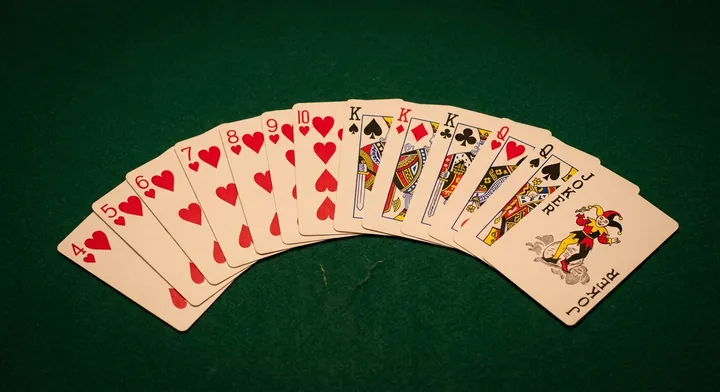
Goal
Be the first to meld your entire hand into sets and runs and go out. Before you may lay anything down, though, your opening melds must total at least the required points - 40 in Kalooki 40 or 51 in Kalooki 51.
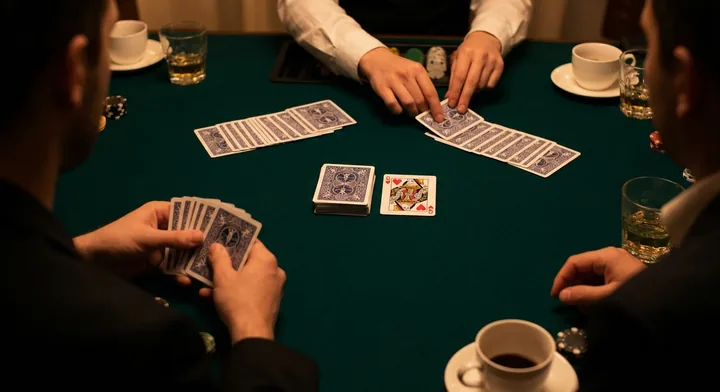
Deal
Shuffle two standard 52-card decks together with jokers. Each of the two players receives thirteen cards. The rest form the face-down stock, and the top card is turned up to start the discard pile.
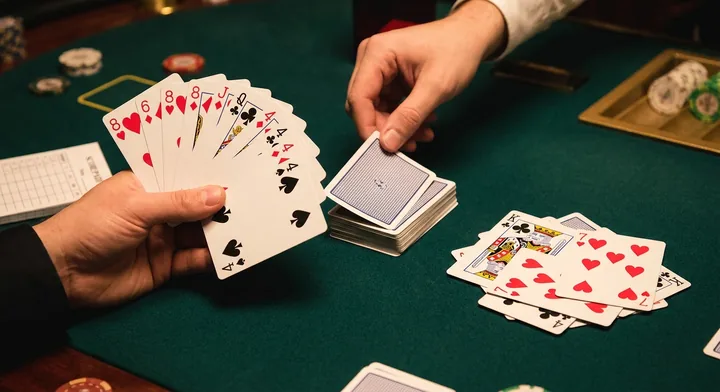
Draw and discard
On your turn draw one card from the stock or take the top card of the discard pile, work on your melds, then discard one card face up. You may only take the discard if you can use that card, and you must always finish by discarding.
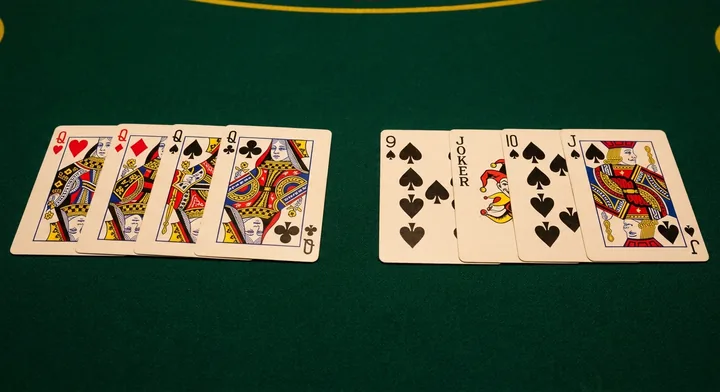
Melds
Sets are three or four cards of the same rank and runs are three or more consecutive cards in one suit; jokers are wild and substitute for any missing card. Once you have opened, you lay off onto melds already on the table and may swap a joker out of a meld by replacing it with the real card it represents, freeing that joker for your own use.
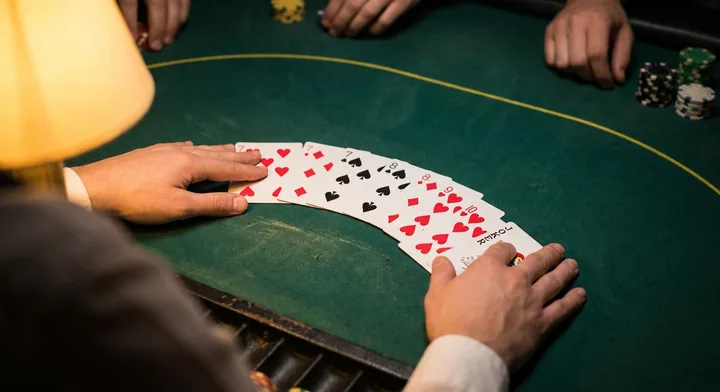
Winning
You go out and win the deal when you have melded every card and made your final discard. Your opponent scores penalty points for the cards left in hand, with jokers carrying the heaviest penalty, and play continues to an agreed target over several deals.
History of Kalooki
Kalooki, also written Kaluki, is a Rummy variant with two distinct homes. In Britain it took hold as a two-deck, joker-driven Rummy game, while in Jamaica it became a genuine cultural institution, a staple of family gatherings, community fundraisers, and long social evenings that Jamaican migrants later carried to Britain, the United States, and beyond.
The name itself is thought to derive from the Rummy relative Kaluki or from older continental melding games, and like most of the family its exact parentage is blurred by generations of informal play. What stayed constant were the traits that make it stand out - a double deck, wild jokers, and above all the points threshold a player must clear before laying down a first meld, a rule that injects tension into every opening.
The two headline forms, Kalooki 40 and Kalooki 51, are named directly for that opening requirement. The forty-point version opens the floodgates sooner and plays quickly, while the fifty-one-point version demands stronger hands and longer buildup. Both spread widely in the twentieth century, and Jamaican Kalooki in particular remains a beloved, fiercely competitive pastime celebrated at tournaments to this day.
How to Win Kalooki: Strategy
💡 Top tip: Plan your opening around the threshold - do not draw and discard aimlessly, because until you can lay melds worth the required 40 or 51 points in one go, you cannot meld at all.
Winning tips, in order of importance
- Treat jokers as your most precious cards; a single joker can complete a high-value set that clears the opening bar in one turn.
- In Kalooki 51 the higher bar means you should collect high cards - aces, kings, and joker-boosted sets - to reach fifty-one before your opponent opens.
- In Kalooki 40 the lower bar lets you open sooner, so prioritize speed and get melds on the table to start laying off and swapping jokers.
- Remember there are two of every card, so a set or run you want has extra copies floating in the deck and pile - patience often pays off.
- Once open, swap jokers out of melds whenever the natural card turns up, recycling the wild into a fresh meld to accelerate going out.
- Never sit on jokers at the end; if you are caught with one when your opponent goes out, its heavy penalty can swing the whole deal.
Advanced tactics for Kalooki
- Balance opening speed against opening value: rushing to meet a 40 bar with cheap melds can leave you a threadbare hand, while overloading for 51 risks being caught mid-build.
- Use the two-deck structure to read safety - because duplicates exist, a card discarded once is far more likely to have a live twin that you or your opponent still needs.
- Hoard the natural cards that match jokers already melded on the table, so you can swap and reclaim those wilds at the ideal moment before going out.
- Against a Kalooki 51 opponent, they must gather more before opening, so pressure them by starving high cards and forcing a risky late opening.
- In Kalooki 40, expect early openings from both sides; keep your deadwood low from the first turns so an opponent's quick exit does not catch you loaded.
- Count the jokers - with a fixed number in the double deck, knowing how many remain tells you whether to gamble on a wild completing your run.
- Sequence your discards to avoid feeding your opponent's opening; a single high card handed over can be exactly what lifts them over the 40 or 51 line.
Common Kalooki mistakes to avoid
- Missing your buy-in window - in Kalooki you can buy a discard out of turn, so passing up a card that fits your hand wastes a rare chance to catch up.
- Buying cards greedily - each buy adds a penalty card from the stock, so only buy when the discard truly advances your melds.
- Ignoring joker rules for your table - some Kalooki games cap jokers or bar them from certain melds, so confirm before you build around a wild.
- Sitting on a huge unmelded hand - if an opponent goes out you eat every point you hold, so keep trimming high deadwood as you play.
Kalooki Variations
Kalooki 40
The faster mode, where a first meld worth just 40 points unlocks play. Lower openings mean cards hit the table sooner and both players spend more of the deal laying off and swapping jokers.
Kalooki 51
The tougher mode, requiring 51 points to open. Hands build longer, high cards and jokers matter more, and a mistimed opening can leave a player badly exposed to a rival who goes out first.
Jamaican Kalooki
The version at the heart of Jamaican card culture, often played by several players with rich house rules on joker penalties, buying discards, and multi-deal scoring that can run late into the night.
Contract Kalooki
A cousin in which each successive deal sets a different required combination of sets and runs to open, blending Kalooki's threshold idea with the fixed contracts of games like Contract Rummy.
Joker swap ban
A stricter house rule that forbids pulling a joker back out of a meld once it is on the table, so wilds are committed permanently and must be spent with extra care.
Kalooki FAQ
What is the opening requirement in Kalooki?
Before you can place any meld on the table, your first lay-down must be worth at least a set number of points all at once. That threshold is 40 points in Kalooki 40 and 51 points in Kalooki 51 - the defining difference between the two modes.
What is the difference between Kalooki 40 and Kalooki 51?
Only the opening bar changes. Kalooki 40 lets you open with melds totaling 40 points, so play is faster and openings come sooner; Kalooki 51 demands 51 points to open, which forces longer hand-building and makes high cards and jokers more decisive.
How do jokers work?
Jokers are wild and can stand in for any card a set or run needs. Once you have opened, you may swap a joker out of a meld on the table by supplying the actual card it represents, then reuse that freed joker in a new meld of your own.
How many decks and jokers are used?
Kalooki is played with two standard 52-card decks shuffled together along with jokers, giving 108 or more cards. The double deck means two copies of every card exist, which changes the odds and makes duplicate cards a routine part of building melds.
How do cards score at the end of a deal?
Cards left in hand count against you: number cards score their face value, court cards typically score 10, aces score high (commonly 11 or 15), and jokers carry the heaviest penalty. Exact values vary by house rule, so agree them before you start.
Can I lay off cards before I have opened?
No. Until you have made your qualifying opening meld worth 40 or 51 points, you cannot lay off onto other melds or place any cards down. Opening is the gate that unlocks all further melding and lay-offs for the rest of the deal.
Do jokers count toward the opening value?
Yes, a joker contributes the value of the card it replaces toward your opening total, which is why a joker in a high set can push you over the threshold quickly. Some house rules limit how many jokers an opening meld may contain, so confirm this first.
How do you win a full game of Kalooki?
Each deal, the player who melds out wins and the loser tallies penalty points for the cards left in hand. Deals repeat and penalties accumulate; the player with the fewest points when someone reaches the agreed limit wins the game.
Kalooki guides & strategy
Still have a question about Kalooki? Browse the full rummy FAQ, look up a term like meld or deadwood in the rummy glossary, or compare Kalooki with the other games in the rules for every rummy game.
Last updated .